
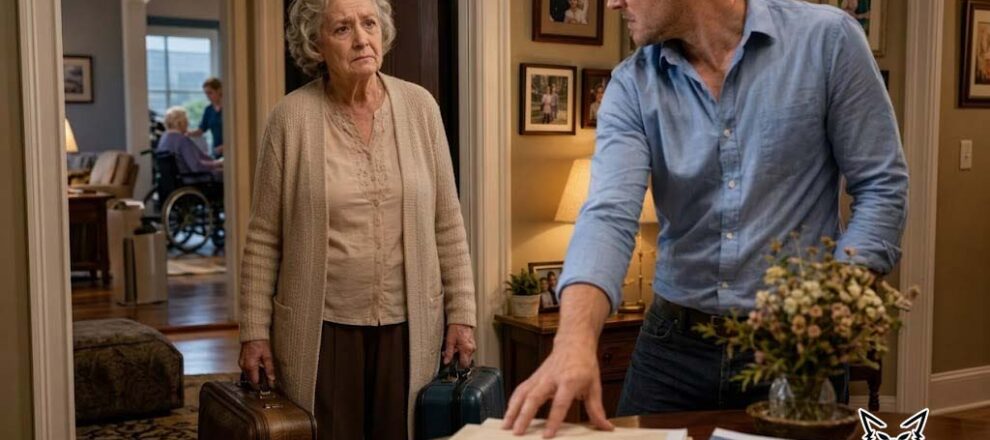
PART 2 — THE CALL THREE DAYS LATER
“Mom.”
Jason’s voice had changed.
That was the part I remember most.
Five minutes earlier, he had been shouting.
Now he sounded like a child who had opened a door he was warned not to touch.
“What did you do?”
“I didn’t do anything three days ago.”
“You know what I mean.”
“Yes.”
“The deed says you don’t own the house.”
“That’s not exactly what it says.”
“It says the Hayes Family Housing Trust owns it.”
“Yes.”
“What is that?”
“A trust.”
“I know what a trust is.”
“Then we’re making progress.”
“This isn’t funny!”
“No.”
It wasn’t.
I became serious.
“Did you call the number listed in the documents?”
“That woman showed up at the house.”
“Which woman?”
“Some lawyer.”
“Helen Moore.”
“Yes.”
Helen had been my attorney for almost fourteen years.
She was sixty-four, gray-haired, precise, and capable of making grown men uncomfortable simply by waiting for them to finish lying.
“What did Helen tell you?”
“That I have no authority to sell the house.”
“That’s true.”
“She said even you can’t just give it to me.”
“Also true.”
Jason stopped.
Then:
“You did this because you knew I’d need the money someday?”
“No.”
“Then why?”
I looked toward the window.
The answer started with my sister.
Not Jason.
Not Robert.
My older sister, Anne.
Anne married young.
Had two sons.
Stayed home for years.
After her husband died, one son moved into her house “temporarily.”
He convinced her to add him to accounts.
Then to sign a power of attorney.
Then to borrow against the house to help his business.
By the time Anne understood what had happened, the business had failed and most of her home equity was gone.
She spent the final three years of her life renting a room from a friend.
Anne never called it abuse.
She said:
“He was just desperate.”
That sentence haunted me.
After her funeral, Robert and I sat at our kitchen table.
Jason was twenty-three.
Already working.
Already living on his own.
Robert said:
“I don’t ever want this house becoming a weapon between you and Jason.”
Neither did I.
So we met Helen.
The structure changed several times over the years.
After Robert died, I updated parts of the estate plan.
But the central purpose remained.
The house belonged to the Hayes Family Housing Trust.
I retained a lifetime right to live there.
An independent trustee had authority over major decisions.
Upon my death—or if I permanently chose not to return—the property would not automatically pass to Jason.
Instead, the trust would support a housing program for older widowed or divorced women facing financial abuse or housing insecurity caused by family members.
I explained none of that yet.
Not on the phone.
Jason was too angry to hear it.
Instead I asked:
“Why was a realtor already at the house?”
Silence.
“Jason?”
“I wanted an appraisal.”
“After three days?”
“Why wait?”
That answer told me everything.
“You told the realtor you had authority to sell.”
“I thought I would.”
“Why?”
“You moved out.”
“That does not transfer ownership.”
“I’m your only child.”
“That does not transfer ownership either.”
He became quiet.
Then:
“I already made plans.”
There it was.
“What plans?”
He did not answer.
“Jason.”
“I put a deposit down.”
“On what?”
“A business property.”
My stomach tightened.
“How much?”
“Mom—”
“How much?”
“Thirty-five thousand.”
“Where did thirty-five thousand dollars come from?”
Silence.
Then:
“A line of credit.”
I closed my eyes.
“Based on what?”
He whispered:
“The house.”
For a second, I genuinely did not understand.
Then I did.
“You told a lender you expected proceeds from selling my house.”
“It wasn’t a mortgage against your house.”
“Then what was it?”
“A personal bridge loan.”
“Supported by expected inheritance?”
He said nothing.
I felt cold.
“Jason.”
“The lender wanted proof I was likely to receive enough money.”
“What did you give them?”
“Nothing fake.”
That was not reassuring.
“What did you give them?”
“A copy of your old will.”
My breath stopped.
The old will.
Before Robert and I created the housing trust, our wills had left nearly everything to Jason.
He had found a copy somewhere.
Maybe among childhood records.
Maybe in an old file I forgot existed.
“That will is twenty years out of date.”
“I didn’t know.”
“Did you tell the lender it was current?”
Silence.
My heart hurt.
Not because I feared losing the house.
The trust protected it.
Because I was beginning to understand how far my son had gone before he ever asked whether I wanted to leave.
“Jason.”
“I thought you were going to agree.”
“To what?”
“To selling.”
“That is not what I asked.”
He was crying now.
I could hear it.
“I thought once you were settled, it would all make sense.”
The old family disease.
Make the decision first.
Expect permission later.
I pressed my fingers to my forehead.
“Call Helen.”
“I did.”
“Call her again.”
“She says she represents the trust, not me.”
“She’s correct.”
“What am I supposed to do?”
There it was.
The question I had answered for Jason his entire life.
What am I supposed to do?
When he forgot a school project.
When his college rent was short.
When his first marriage nearly collapsed.
When he needed the $8,000.
Mom.
Fix it.
I almost did.
Then I looked around the room he had chosen for me.
The senior residence.
The place he believed I should spend the rest of my life so my home could become capital.
“I don’t know, Jason.”
He stopped crying.
“What?”
“I don’t know.”
“You’re my mother.”
“Yes.”
“You’re just going to let me lose thirty-five thousand dollars?”
“No.”
I took a breath.
“You are going to decide what you do about the thirty-five thousand dollars you chose to risk.”
He hung up.
I sat beside the window for a long time afterward.
Then someone knocked.
Gloria from down the hall stood outside.
“Breakfast?”
I almost said no.
Instead:
“Yes.”
For the first time in forty years, my son had a financial crisis.
And I went to breakfast.
PART 3 — WHAT ROBERT AND I PUT IN THE TRUST
Helen visited Meadowridge that afternoon.
She brought two coffees.
“You sound cheerful,” I said.
“I spent my morning explaining trust law to your son.”
“That will do it.”
She sat beside me.
“How bad?”
“Legally?”
“Yes.”
“The house is fine.”
I exhaled.
I knew that.
Still, hearing it helped.
“Jason has no ownership interest he can presently sell.”
“Good.”
“He also does not have a current power of attorney from you.”
“No.”
“He found an old estate-planning file.”
“I gathered.”
“The lender may have relied on his representation that he expects a substantial inheritance.”
“Is that illegal?”
Helen gave me the lawyer look.
“It depends on exactly what he represented and what documents he submitted.”
My stomach tightened.
“Do we know?”
“Not yet.”
I stared at my coffee.
“What happens now?”
“To the house?”
“Yes.”
“Nothing unless you want something to happen.”
I looked up.
That mattered.
The trust did not throw me out because I spent four nights elsewhere.
My lifetime occupancy right remained.
Meadowridge was a choice.
Not exile.
“Can I go home?”
Helen stared at me.
“Eleanor, of course you can go home.”
The answer hit me harder than expected.
Jason had spoken so confidently.
You need to move.
This is better.
It makes sense.
Somewhere between his certainty and my exhaustion, I had started feeling as if the decision were already final.
Helen continued:
“You signed a thirty-day trial residency agreement.”
“Yes.”
“You did not transfer your domicile.”
“No.”
“You did not surrender your occupancy right.”
“No.”
“So if you want to sleep in your own bedroom tonight, call a cab.”
I started laughing.
Then crying.
Helen waited.
“I thought agreeing to leave would teach him something.”
“Maybe it will.”
“I also think part of me wanted to know what he would do.”
“And now you know.”
That hurt.
“Yes.”
Helen opened her briefcase.
Inside was a copy of the trust memorandum.
Robert and I had created the first version sixteen years earlier.
After Anne’s death.
We later amended it.
The trust owned the house.
I retained exclusive lifetime occupancy rights.
The independent trustee—Helen after Robert died—handled any sale, major borrowing, or conversion.
If I wanted to downsize voluntarily, the trust could sell the house and purchase another residence for me.
My security came first.
After my death, remaining trust property would fund what Robert named:
The Anne Hayes Home Project.
At the time, it was mostly an idea.
Robert wanted the house itself used if practical.
Helen had later helped me partner with a local nonprofit called Harbor Women’s Network.
They served older women facing housing insecurity, including widows pressured into signing away assets to adult children or other relatives.
The house could eventually become transitional housing.
Or be sold and the proceeds permanently fund housing assistance.
Depending on what made financial sense then.
Jason was not disinherited entirely.
Robert and I had other assets.
A retirement account.
Savings.
Life insurance that had partly funded Jason’s education years ago.
Jason remained a beneficiary of a modest separate trust.
But not the house.
Robert had been very clear.
A home should keep someone safe. It should never become the price of keeping a child’s affection.
I traced the line with my finger.
“I miss him.”
Helen’s expression softened.
“I know.”
“Did we do the right thing?”
“With the trust?”
“Yes.”
She considered her answer.
“I think you did the thing that reflected your values.”
Lawyer answer.
I smiled.
Then:
“Jason will see it as punishment.”
“He may.”
“It wasn’t.”
“I know.”
“We created this before he ever started acting like this.”
“I know.”
That mattered.
I had not secretly changed the deed in revenge after Jason asked me to move.
This was not a trap.
The protection existed long before the betrayal.
Because Robert and I understood something our son apparently had not yet learned.
Love and inheritance are not the same contract.
PART 4 — I WENT HOME
I returned to my house the next morning.
Without telling Jason.
The taxi stopped beside the curb at 10:15.
The front lawn needed trimming.
A realtor sign was leaning against the garage.
Not planted.
Just waiting.
I stared at it.
Then walked inside.
Jason was in my dining room.
So was Kelly.
Papers covered the table.
They both froze.
“Mom?”
I set down my suitcase.
“Hello.”
Jason stood.
“What are you doing here?”
That question almost made me laugh.
“I live here.”
Kelly looked horrified.
Not angry.
Embarrassed.
That distinction mattered.
“Eleanor, I thought you were staying at Meadowridge.”
“I was trying it.”
Jason stepped forward.
“You can’t just—”
He stopped.
Good.
I waited.
He looked around.
His own mistake became visible in his face.
“You can’t just what?” I asked.
“Never mind.”
I took off my coat.
Then I noticed the papers.
Realtor estimates.
Renovation quotes.
A developer’s letter of interest.
Jason had moved quickly.
Very quickly.
“How long have you been planning this?”
Kelly looked at him.
He looked at her.
I understood.
“Kelly didn’t know.”
She spoke immediately.
“I knew he wanted to talk to you about downsizing.”
I waited.
“I did not know he had already contacted a lender based on the house.”
Jason’s jaw tightened.
“Kelly.”
“No.”
She turned toward him.
“You told me your mom wanted to move.”
“I thought she did.”
“You told me the house would be yours afterward.”
“Eventually.”
I stared at him.
“Eventually?”
He looked at me.
I had never heard my own death described so efficiently.
Kelly closed her eyes.
“Oh my God.”
Jason snapped:
“Stop making it sound like that.”
“How should it sound?”
He looked trapped.
“I meant inheritance.”
“I’m still alive.”
“I know that!”
“Do you?”
Silence.
I walked toward Robert’s old desk.
The bottom drawer was open.
Files scattered.
He had searched everything.
“You told me where the papers were,” Jason said defensively.
“Yes.”
“Why?”
“Because I wanted you to read them.”
He stared.
“You set me up.”
“No.”
His face reddened.
“You knew I would try to sell.”
“I suspected you might.”
“That’s the same thing.”
“No, Jason.”
I looked at him.
“Setting you up would mean creating a trap after you made the request.”
I pointed toward the old trust document.
“Your father signed that sixteen years ago.”
Kelly turned.
“Robert knew?”
“Yes.”
“Knew what?”
“Not that Jason would do this.”
I looked toward my son.
“He knew what happened to my sister.”
Jason’s expression changed.
He remembered Aunt Anne vaguely.
“She lost her house.”
“Yes.”
“Because her son’s business failed.”
“No.”
I shook my head.
“She lost her house because she signed away protections trying to save an adult child who had learned that his panic automatically became her responsibility.”
The room became quiet.
Jason looked away.
“That’s not me.”
“I hope not.”
His eyes returned.
“That’s not me.”
“Then show me.”
He stared.
“How?”
“Take responsibility for the loan without trying to turn my house into the solution.”
His face collapsed.
“You have no idea what you’re asking.”
“I’m asking you to solve the financial decision you made.”
“You could help.”
“I could.”
Hope appeared.
Then I continued.
“But I’m not going to solve it by giving you the house.”
Hope disappeared.
“You care more about some future strangers than your own son.”
There it was.
I knew it would come.
I had prepared for anger.
Still, the sentence hurt.
“Those women are not more important than you.”
“That house goes to them.”
“The house serves a purpose.”
“And I don’t?”
I stepped closer.
“You are my son.”
My voice broke.
“You should never have had to compete with a house.”
He stared.
“Then give it to me.”
“No.”
He laughed bitterly.
“Exactly.”
That was when I understood we were not really arguing about property.
Jason believed love became measurable when someone said no.
And somewhere in his life—
possibly through things I had done myself—
I had helped teach him that.
PART 5 — HOW I HELPED CREATE THE PROBLEM
That night, after Jason and Kelly left, I walked through the house.
The hallway.
Kitchen.
Jason’s old room.
It would have been easy to make him the villain.
A greedy son.
Ungrateful.
Selfish.
All true in moments.
Not the whole truth.
In his old bedroom, I found a high-school photograph.
Jason wearing a football jersey.
Robert had already been dead thirteen years by then.
I remembered the night before that picture.
Jason had forgotten he needed $180 for team fees.
He told me at ten o’clock.
I drove across town to an ATM.
Paid it the next morning.
No consequence.
When Jason wrecked his first car at nineteen, I paid the deductible.
When he overspent during college, I transferred money.
When he got married, I covered the flowers after the budget ran over.
When his first child was born, I quietly paid a hospital balance.
When his credit-card debt became uncomfortable, I gave him a “one-time” rescue.
Then another.
I had spent years saying:
I don’t want him stressed.
He has enough going on.
He’ll pay me back later.
He’s my son.
Maybe Jason had not invented the belief that Mom would always turn consequences into manageable inconvenience.
Maybe I helped build it.
That did not excuse him.
It did give me work to do too.
The next morning, I called Helen.
“I think I made him this way.”
“No.”
“That was fast.”
“Because it’s too simple.”
“I rescued him constantly.”
“Yes.”
“Then—”
“You contributed to a pattern.”
I became quiet.
“That is different from creating another adult’s choices.”
“I hate lawyer sentences.”
“You keep hiring me.”
“I also moved into a nursing home to prove a point. My judgment is questionable.”
She laughed.
Then became serious.
“Eleanor, accountability is useful. Self-blame is just control wearing a sad face.”
“What?”
“If you say you created Jason’s behavior, then you also get to imagine you can single-handedly fix it.”
I hated how correct that sounded.
“So what do I do?”
“Own your part.”
“And his?”
“Leave it with him.”
Harder than it sounds.
PART 6 — THE LOAN HE THOUGHT I WOULD REPAY
Jason finally told me the full story a week later.
He came alone.
No realtor.
No papers.
Just my son.
We sat in the kitchen.
“I owe $112,000.”
I stared.
“What?”
“The thirty-five was the deposit.”
“On what?”
“A commercial building.”
Jason and his friend Brad wanted to expand their outdoor-equipment company.
I knew Jason had invested.
I did not know he had become a partner.
They planned a retail showroom, warehouse, and e-commerce operation.
The building cost more than they could comfortably afford.
Jason arranged short-term financing based partly on anticipated future funds.
Not a mortgage against my house.
Not legally.
But he had presented the old will and explained he expected significant proceeds once I downsized.
The lender treated that expectation as part of his personal financial picture, though not as direct collateral.
“What exactly did you tell them?”
“That I expected an inheritance.”
“When?”
He looked ashamed.
“Soon.”
My chest tightened.
“How soon?”
“I said you were moving into long-term care.”
I closed my eyes.
“I was not in long-term care.”
“I thought you would be.”
“Before I agreed?”
He looked down.
“Yes.”
There was the betrayal.
Not theft.
Not forged deeds.
Something quieter.
He had begun planning the financial consequences of my decline before confirming whether I was declining.
“What happens now?”
“The lender wants updated financial information.”
“And when you tell them the house isn’t yours?”
“They may call part of the loan.”
“Can you pay?”
“Not all at once.”
“Can the business?”
“Maybe if we sell inventory.”
“Then sell inventory.”
His eyes widened.
“We’d cripple the expansion.”
“Then the expansion was too large.”
“You sound like a banker.”
“I spent thirty years in hospital billing. We were less forgiving.”
He almost smiled.
Then:
“Brad may walk away.”
“That is between you and Brad.”
Jason stared at the table.
“Are you really not going to help me?”
I thought carefully.
“I will pay for an hour with an independent financial restructuring adviser.”
His expression fell.
“That’s it?”
“For now.”
“You have savings.”
“Yes.”
“You could loan me the money.”
“Yes.”
“You just won’t.”
I felt guilt.
Hot.
Automatic.
Then I recognized it.
An old role protesting.
“No.”
Jason stood.
“I hope that trust keeps you warm at night.”
He walked out.
I cried after the door closed.
Boundaries do not always feel strong.
Sometimes they feel terrible.
That does not make them wrong.
PART 7 — KELLY CAME WITHOUT HIM
Kelly visited two days later.
She brought no grandchildren.
“I need to apologize.”
I let her in.
“For?”
“I helped push Meadowridge.”
I waited.
“Jason told me you’d been struggling.”
“With what?”
“Stairs. Memory. Bills.”
I stared.
“My memory?”
Kelly looked sick.
“He said you’d forgotten to pay utilities twice.”
“That happened after autopay changed.”
“I know now.”
“What else?”
“He said you fell.”
“I tripped over a garden hose.”
“He said you were becoming isolated.”
“I host book club twice a month.”
She covered her face.
“I should have called you.”
“Yes.”
Not cruel.
True.
She lowered her hands.
“I wanted the money too.”
I appreciated that.
Not because it was pleasant.
Because it was honest.
“Our mortgage is high,” she continued. “The kids’ expenses keep growing. Jason kept saying the house would eventually be his and maybe it was ridiculous for us to struggle while so much value sat unused.”
I felt sick.
“Did you ever hear how that sounded?”
“Not until you came home.”
Silence.
Then:
“I’m sorry.”
I looked at her.
“Are you leaving him?”
Her eyebrows lifted.
“No.”
“Good.”
She looked surprised.
“I’m angry at Jason. That doesn’t mean I need his marriage destroyed.”
Kelly began crying.
“He keeps saying this is your fault.”
“I know.”
“I told him it isn’t.”
That mattered.
“What is he doing about the business?”
“Meeting the lender tomorrow.”
“Good.”
“He’s terrified.”
“I know.”
Kelly looked at me.
“You’re not going to fix it.”
“No.”
She nodded slowly.
“I think that might be the first useful thing anyone has done for him in years.”
The sentence hurt.
Because she included me.
Correctly.
PART 8 — THE WOMAN THE HOUSE WAS NAMED FOR
Harbor Women’s Network asked me to speak at a small fundraiser that spring.
I usually said no.
This time, I agreed.
Not about Jason.
About Anne.
There were forty people in a community center.
Mostly women.
Some older.
Some young advocates.
I stood behind a cheap podium and told them about my sister.
Anne had been sixty-two when her husband died.
She owned her home outright.
Within five years, she had almost nothing.
Her son did not wake up one morning planning to ruin her.
That mattered to me.
He asked for help.
Then more help.
Then access.
Anne kept saying:
“He’s having a hard year.”
One hard year became several.
By the time she wanted to say no, she felt guilty because she had always said yes.
The audience was silent.
I said:
“My sister loved her son.”
My voice shook.
“Her mistake was not loving him.”
I paused.
“It was believing love required her to absorb every consequence he could not tolerate.”
Afterward, a woman named Susan approached.
She was seventy-three.
Her daughter had pressured her to co-sign a mortgage.
“I thought saying no meant I was a bad mother.”
I looked at her.
“I know.”
“Did your sister ever forgive her son?”
“She died loving him.”
“That’s not what I asked.”
Sharp woman.
I smiled sadly.
“No. I don’t know if she forgave him.”
Susan nodded.
“Maybe love is enough.”
Maybe.
That night, I returned home and looked at the trust documents again.
For years, the Anne Hayes Home Project had been an abstract future plan.
Someday.
After me.
I called Helen.
“What if I want to start part of it now?”
She paused.
“What are you thinking?”
The house was large for one person.
Jason had not been entirely wrong about that.
But his solution assumed I disappeared so the value could move toward him.
What if instead the house became more alive?
I did not surrender my occupancy rights.
I did not move out.
But with trust and nonprofit approval, we began exploring a pilot program.
The detached workshop Robert once used could be converted into a small one-bedroom cottage.
One woman at a time.
Short-term transitional housing.
Separate entrance.
Privacy.
Support through Harbor Women’s Network.
The trust could fund renovations.
I would remain in my home.
Robert’s idea could begin while I was alive enough to see it.
That felt right.
When Jason heard, he lost his mind.
Again.
“You’re building a house for strangers in my backyard?”
“My backyard.”
He stopped.
Then:
“You know what I mean.”
“I do.”
“You’ll live next to random people?”
“Screened program participants.”
“This is insane.”
“No.”
I looked at him.
“This is exactly what your father and I wanted the property to do.”
His face tightened.
“Dad would never choose strangers over me.”
I became very still.
“Don’t use your father that way.”
Jason stopped.
“He loved you.”
My voice broke.
“He also watched what happened to Anne.”
Jason looked away.
“Both things can be true.”
He left angry.
But this time, he did not ask me for money.
Strange progress.
PART 9 — THE FIRST WOMAN WHO MOVED IN
Her name was Teresa.
Sixty-six.
Former elementary-school librarian.
Widowed.
One adult daughter.
Teresa arrived with three suitcases and a box of books.
Her daughter had convinced her to sell a condo and move in “temporarily.”
Then used much of Teresa’s money for renovations and debt.
When the relationship deteriorated, Teresa had nowhere stable to go.
Legal proceedings were underway.
She needed six months.
Maybe nine.
The cottage behind my house gave her time.
The first morning after she moved in, I saw her sitting on the little porch holding coffee.
She looked toward me.
“Am I being too loud?”
“You’re drinking coffee.”
“I’ve been criticized for less.”
That sentence stayed with me.
We became friendly.
Not best friends.
The program had boundaries.
I was not her rescuer.
She was not my project.
We simply shared a property.
Sometimes dinner.
Sometimes silence.
Jason refused to visit for almost two months.
Then one Sunday, he arrived unexpectedly.
Teresa was outside pulling weeds.
He assumed she was a gardener.
I nearly laughed.
“This is Teresa.”
His face changed.
“Oh.”
She smiled.
“You must be Jason.”
He looked at me.
I had never discussed his behavior with her.
Her knowing his name meant nothing.
Still, guilt makes ordinary things feel like exposure.
They spoke politely.
Later, inside, Jason asked:
“What happened to her?”
“That’s her story.”
He looked surprised.
“You don’t know?”
“I know some.”
“Then—”
“Jason, she is not here to become evidence in our argument.”
He went quiet.
That was important.
The trust’s purpose was not to prove him wrong.
It was to help people.
Those were different.
Before leaving, Jason stood beside the pantry door.
His old height marks were still there.
He traced one.
“Did Dad really want this?”
“Yes.”
“Why didn’t you tell me?”
I thought about it.
“Because when you were twenty-three, it was an estate-planning decision. Not a referendum on your character.”
He stared.
“You could have told me later.”
“Yes.”
“Why didn’t you?”
I looked at him.
“Maybe I was afraid you’d hear it as rejection.”
His eyes filled.
That was my part.
I had hidden the trust because I did not want to hurt him.
Secrets created space for assumptions.
Not equal to what Jason did.
Still mine.
“I’m sorry.”
He seemed shocked.
“For what?”
“For not telling you sooner what your father and I decided.”
Jason sat down.
For the first time, we talked about the house without arguing.
Not well.
Not perfectly.
But we talked.
PART 10 — JASON LOST THE DEAL
The lender did not destroy Jason.
That surprised him.
Reality is sometimes less dramatic than fear.
He disclosed the outdated will.
Admitted the expected inheritance was uncertain and not presently available.
His attorney advised him to correct the record in writing.
The lender reduced his available line of credit and required additional business collateral.
Jason and Brad had to decide whether to proceed.
They could not afford the building.
So they walked away.
Jason lost part of the deposit.
Not all.
The seller kept $18,000 under the contract terms.
It hurt.
The business survived.
Smaller.
They stayed in their existing warehouse.
Delayed the showroom.
Sold excess inventory.
Cut advertising.
Jason took no salary for two months.
He hated every second.
Then survived.
One evening, he called me.
“I thought losing the building would ruin everything.”
“It didn’t.”
“No.”
Silence.
Then:
“I think I wanted your house because I was terrified of admitting my plan was too big.”
That was new.
“I kept thinking if I could get enough money, the plan would become smart.”
I smiled sadly.
“Many people think that.”
“Did Dad?”
“Frequently.”
Jason laughed.
Then became quiet.
“I’m paying you back.”
“For what?”
“The eight thousand.”
I had nearly forgotten.
The cash-flow rescue.
“You don’t have to do that right now.”
He stopped.
Then I stopped myself.
Old Eleanor.
Making the consequence comfortable.
I corrected:
“What schedule can you afford?”
Jason laughed.
“You almost did it.”
“Yes.”
“Three hundred a month.”
“Fine.”
“I can do four.”
“Jason.”
“Three-fifty.”
“Deal.”
We both laughed.
Something had shifted.
Not because he lost money.
Because he survived losing money without requiring me to absorb it.
Adults need that experience too.
PART 11 — THE NURSING HOME WASN’T THE VILLAIN
I kept my Meadowridge membership.
That surprised Jason.
“You hated it.”
“I hated why I was there.”
Different.
Meadowridge itself was pleasant.
I joined Gloria for lunch twice a month.
Used their pool.
Attended a lecture series.
A year later, when I had knee-replacement surgery, I spent three weeks in their rehabilitation wing voluntarily.
Jason visited every day.
Almost.
The first morning, he walked in holding coffee.
I smiled.
“This time you called.”
He looked embarrassed.
“I deserved that.”
“Yes.”
Then he became serious.
“Do you want to come home after rehab?”
I stared.
“What kind of question is that?”
“One I should have asked last time.”
My eyes filled.
“Yes.”
“Okay.”
No plan.
No realtor.
No discussion about equity.
Just okay.
Sometimes repair arrives in sentences nobody else would notice.
PART 12 — ROBERT’S LETTER
Helen found Robert’s letter while digitizing old trust files.
I had forgotten it existed.
One page.
Addressed to Jason.
Robert wrote it shortly before surgery several years before the accident that eventually killed him.
He must have placed it with the estate-planning papers.
The letter said:
Jason, if you’re reading this, I’m probably not there to explain one thing I hope you understand. Your mother and I will help you when we can. But help that costs another person their security is not help we want to give.
Jason stopped reading.
We were sitting at the kitchen table.
He continued.
The house is not proof that we loved you. What we leave you is not the score of your childhood.
His eyes filled.
If the house someday helps someone else, I hope you do not hear that as us choosing them over you. I hope you hear it as us believing you were raised with enough strength to build your own home.
Jason covered his face.
I cried too.
For years, I had worried he would feel rejected.
Robert had anticipated it.
And answered better than I ever did.
Jason whispered:
“I wish he were here.”
“So do I.”
“Would he be ashamed of me?”
I hated the question.
“I won’t speak for him.”
Jason looked up.
“That sounds like Helen.”
“She charges by the hour. I learned something.”
He almost smiled.
Then I said:
“Your father loved you.”
“I know.”
“And you made choices he probably would have challenged.”
Jason nodded.
“Both can exist.”
“Yes.”
We sat there together.
No inheritance discussion.
No forgiveness ceremony.
Just a mother and son missing the same man.
That healed something property never could.
PART 13 — TERESA WENT HOME
Teresa stayed eleven months.
Her legal case ended with a settlement that returned enough money for her to rent a small condo independently.
The day she left, Jason came to help carry boxes.
His choice.
Teresa handed him a box labeled BOOKS.
“Young man, lift with your knees.”
“I’m forty-two.”
“Then you should know better.”
I laughed.
Jason did too.
Before leaving, Teresa hugged me.
Then whispered:
“You gave me somewhere to stop panicking.”
I held her tighter.
That was exactly what Anne never had.
Time.
Space.
A door that could close.
No adult child demanding an answer before she was ready.
After Teresa drove away, Jason and I sat on the cottage porch.
“Who comes next?”
“I don’t know.”
“You don’t choose?”
“Harbor does.”
“Why?”
“To prevent me from turning this into my personal charity kingdom.”
He smiled.
“Healthy.”
“Annoyingly.”
Then:
“Could I donate?”
I looked at him.
“To the program?”
“Yes.”
“Why?”
He became uncomfortable.
“Do I need a noble answer?”
“No.”
“Because I feel guilty.”
“Then don’t.”
He stared.
“What?”
“Guilt is a terrible long-term funding model.”
He laughed.
I continued.
“Donate when you understand what you want to support.”
Six months later, he did.
Not money.
His company provided shelving and storage equipment for two Harbor apartments at cost.
No plaque.
No announcement.
He never told me.
I learned from Helen.
That meant more.
PART 14 — THE HOUSE HE FINALLY STOPPED WAITING FOR
By seventy-four, I did decide the stairs were annoying.
Not impossible.
Annoying.
I told Jason I was considering moving.
He froze.
Then carefully asked:
“What do you want?”
I smiled.
“Excellent first question.”
He rolled his eyes.
I wanted a smaller single-story condo near Meadowridge and the library.
The trust could sell the main house and purchase a replacement residence for me under its terms.
The cottage program complicated things.
Harbor and Helen reviewed options.
Eventually, a local nonprofit bought the property from the trust at appraised value with financing from a charitable housing fund.
The trust used part of the proceeds to purchase my condo.
The remaining protected funds would support my living needs and later the Anne Hayes Home Project.
The old house itself became something bigger.
After renovations, it contained three independent units for older women in transition.
The pantry door stayed.
I insisted.
All Jason’s childhood height marks.
Preserved behind clear acrylic.
“Why?”
He asked.
“Because the building’s new purpose doesn’t erase our family.”
That mattered.
On closing day, Jason walked through his old bedroom.
He touched the wall.
“I thought this would be mine.”
“I know.”
“I used to imagine selling it.”
“I know.”
“Now I hate that.”
“Don’t.”
He looked at me.
“You were afraid.”
“That doesn’t excuse it.”
“No.”
“But shame doesn’t repair anything either.”
He smiled.
“Helen again?”
“Therapy.”
“Worse.”
We walked onto the porch Robert built.
Jason sat on the top step.
“I think I finally understand Dad’s letter.”
“What part?”
“The house isn’t proof.”
I waited.
“If you had left me this whole place, it wouldn’t mean you loved me more.”
“No.”
“And giving it to the project doesn’t mean you love me less.”
“No.”
He nodded.
“Okay.”
It had taken years.
But okay was enough.
PART 15 — WHAT I ACTUALLY LEFT MY SON
I lived another eleven years after leaving the old house.
Long enough to see both grandchildren graduate high school.
Long enough to watch Jason’s business finally grow at a reasonable pace.
Long enough for Kelly to tease him about spreadsheets.
Long enough to become very good at Meadowridge water aerobics and very bad at bridge.
Jason repaid the $8,000.
Then kept making the monthly transfer by accident.
I called him after the first extra payment.
“You’re done.”
“I know.”
“Then why did you send money?”
“I set autopay.”
“Cancel it.”
He laughed.
“Imagine me trying to give you money and you refusing.”
“Character development.”
When I turned eighty, Jason gave me a framed photograph.
The old house.
But not from when we lived there.
The photograph showed three women sitting on the porch.
Residents of the Anne Hayes Home Project.
Beneath it was a small brass plate:
A HOME SHOULD KEEP SOMEONE SAFE.
I cried.
“Your father said that.”
“I know.”
“How?”
“Helen.”
Of course.
When my health eventually declined, moving into Meadowridge full-time was my decision.
Jason asked.
He did not tell.
That mattered until the end.
One afternoon, not long before my eighty-first birthday, we sat beside the window.
He asked:
“Do you remember the call?”
“What call?”
“The one where I screamed at you.”
I smiled.
“There have been several.”
“Mom.”
“Yes.”
“I asked what you did to the house.”
“I remember.”
He looked ashamed.
“I thought you had tricked me.”
“I know.”
“You hadn’t.”
“No.”
“You had protected yourself before I ever became someone you needed protection from.”
The sentence hurt.
I reached for his hand.
“You were never only that person.”
He looked at me.
“You were greedy.”
“Thanks.”
“Entitled.”
“Better.”
“Scared.”
He became quiet.
“And my son.”
His eyes filled.
“People are more than their worst season.”
He squeezed my hand.
“What did you leave me in the end?”
I laughed.
“That is a remarkably suspicious question.”
“I don’t mean money.”
I knew.
My estate plan was simple.
Jason would receive my personal belongings, some savings, and the separate modest trust Robert and I had always intended for him.
Nothing life-changing.
Enough to remind him we thought of him.
Not enough to become his future.
The larger remaining trust assets stayed with the housing project.
“What did I leave you?”
I repeated.
“Yes.”
I looked toward the garden.
Maybe parents spend too much time thinking inheritance means what exists after death.
Money.
Jewelry.
Property.
The real inheritance happens while everybody is still alive.
Sometimes it is good.
Sometimes terrible.
I had given Jason resilience.
I had also given him too many rescues.
Robert gave him humor.
And a tendency to buy tools he didn’t need.
Anne’s story gave him a warning he understood too late.
The house gave him a boundary.
Eventually.
“I hope I left you the ability to hear no without hearing ‘I don’t love you.’”
Jason started crying.
I did too.
“That one took me a while.”
“Yes.”
“I’m sorry.”
“I know.”
“I really am.”
“I know.”
He looked at me.
“Do you forgive me?”
I thought about the young version of myself.
The widow working two jobs.
The mother who could not bear to let her only child fail.
The woman who moved into a senior home to see whether her son would choose her comfort or her property.
The mother sitting there now.
Older.
Less afraid of disappointment.
“Yes.”
His face broke.
Then I raised one finger.
“But forgiveness is not retroactive permission.”
He laughed through tears.
“That sounds exactly like Helen.”
“Good lawyers are expensive. Use the phrases.”
He kissed my forehead.
Years later, Jason told people the house was the best thing his parents never left him.
Not because he became noble overnight.
Because he learned what inheritance was supposed to do.
It should not make one generation wait for another to disappear.
It should not turn a parent’s security into a child’s business plan.
It should not become proof of love.
The old brick house stood for another twenty-seven years after I moved.
Hundreds of women passed through the program in that time.
Some stayed weeks.
Some months.
A few nearly a year.
One woman escaped a son who had taken her pension.
Another left a boyfriend who controlled her bank account.
One simply needed somewhere affordable after a late-life divorce.
They slept in rooms where Jason once built blanket forts.
They drank coffee on Robert’s porch.
They saw the pencil marks inside the pantry.
A small sign explained them:
A FAMILY GREW HERE FIRST. OTHERS FOUND ROOM TO BEGIN AGAIN.
That was what Robert and I had actually decided the house was for.
Not punishment.
Not revenge.
Room.
Room for me to remain secure.
Room for Jason to become his own man without waiting for my property.
And one day, room for women like Anne who needed enough safety to hear themselves think.
My son once believed the greatest thing I could leave him was a house.
He was wrong.
The most important thing I ever gave Jason was something I should have given him much earlier.
The right to face the consequences of his own choices.
And the knowledge that my saying no did not mean I had stopped being his mother.
It meant I had finally stopped confusing motherhood with surrender.
THE END